
Products with Passion
 Blender
 Photoshop
 After Effects
FLS Company
After Effects
FLS Company
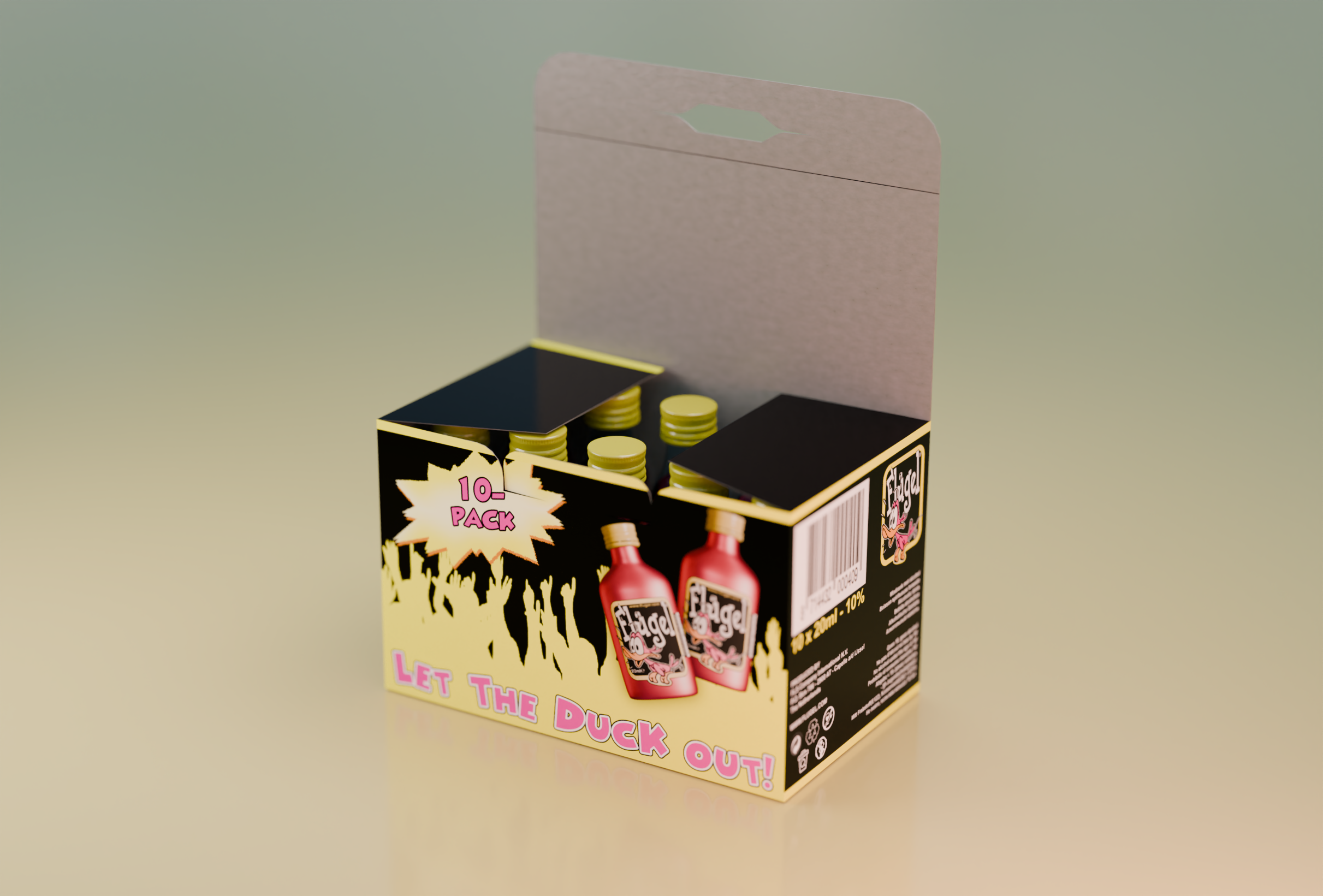
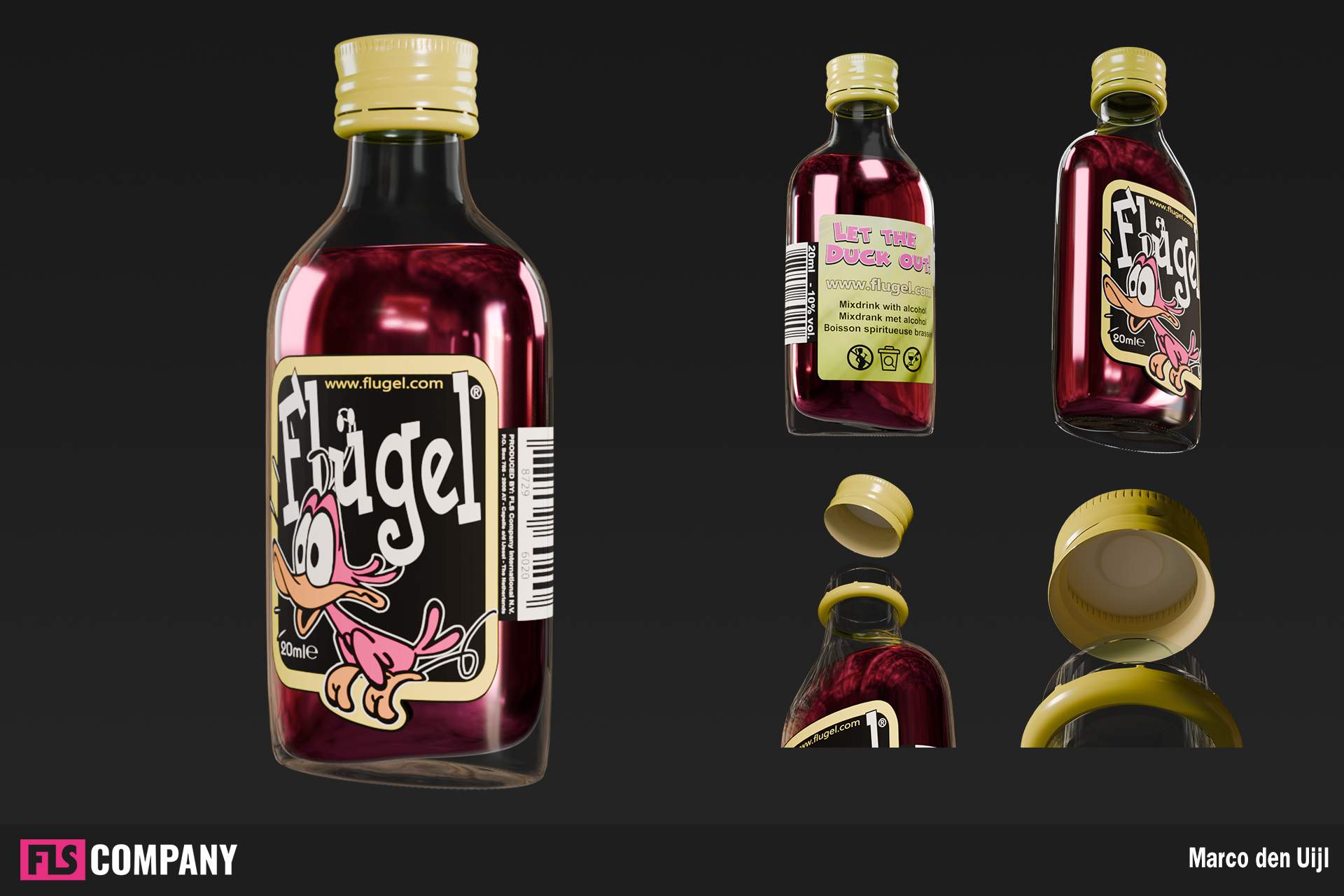
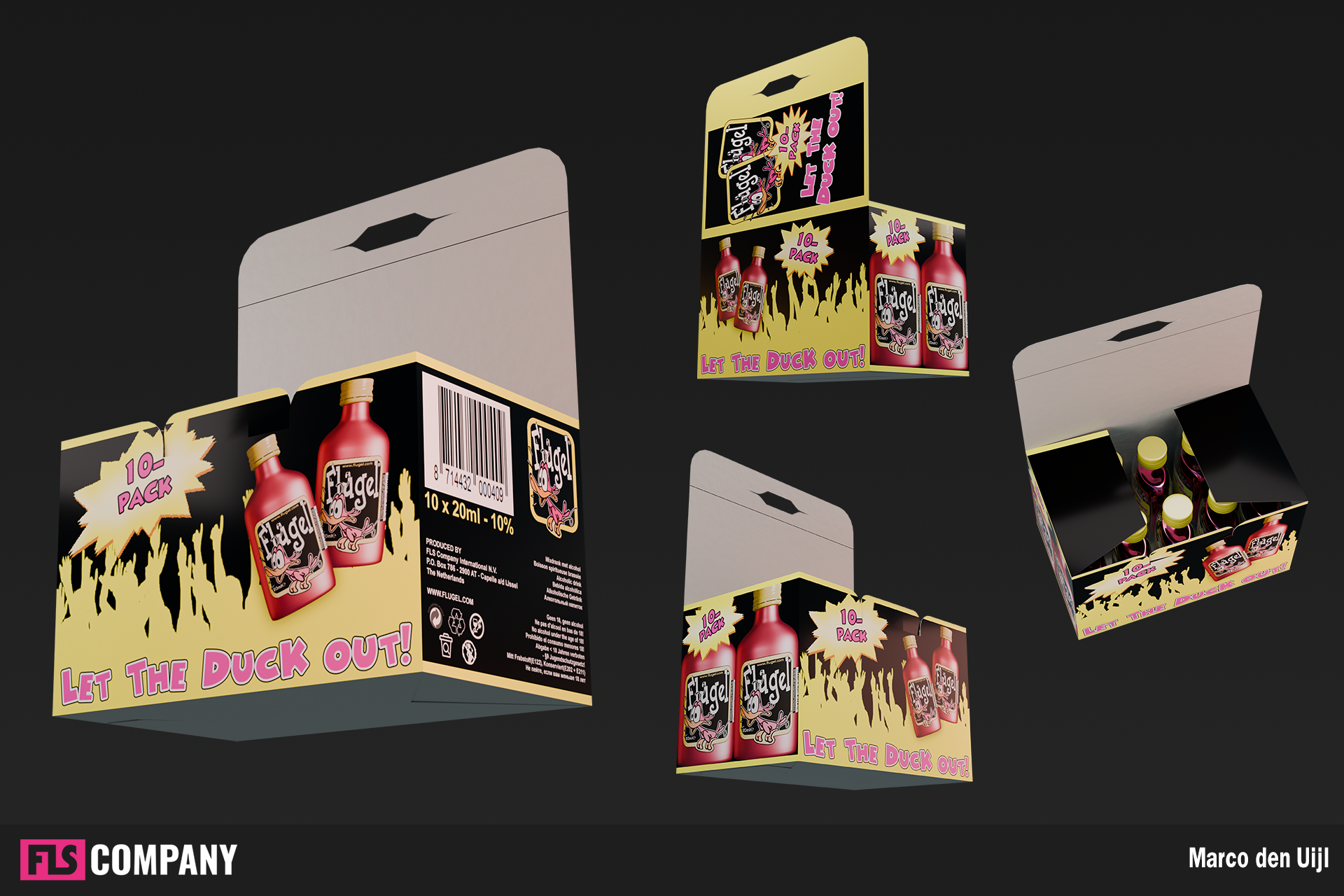
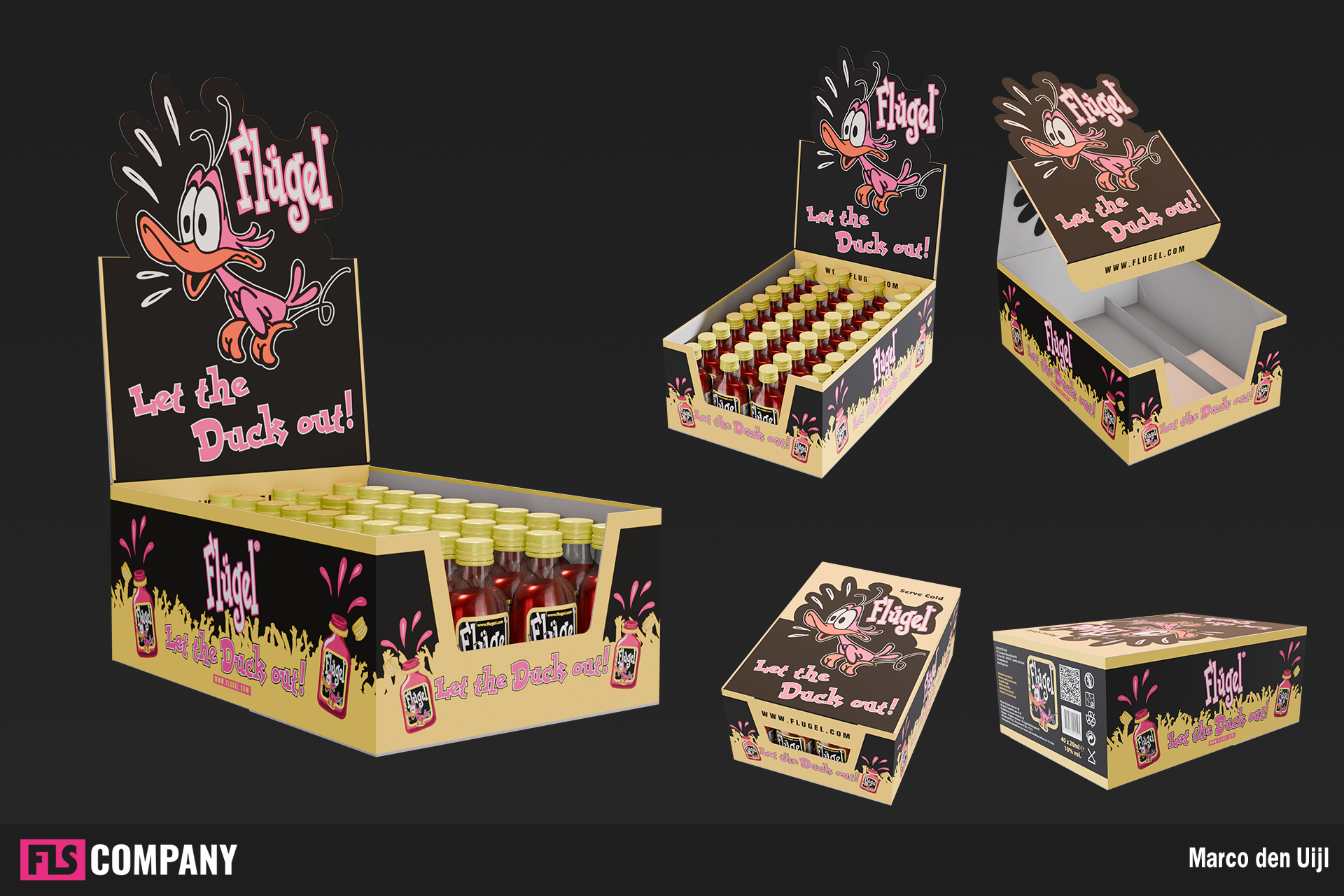
The flagship product and most recognisable brand of FLS. Being the first produced, it posed the greatest challenges — but everything learned here fed directly into all subsequent designs, most notably the sealing mechanism and the methodology of applying product stickers. Distribution packaging was recreated as well, given that multi-pack deals are far more commonplace than single 20ml bottles.
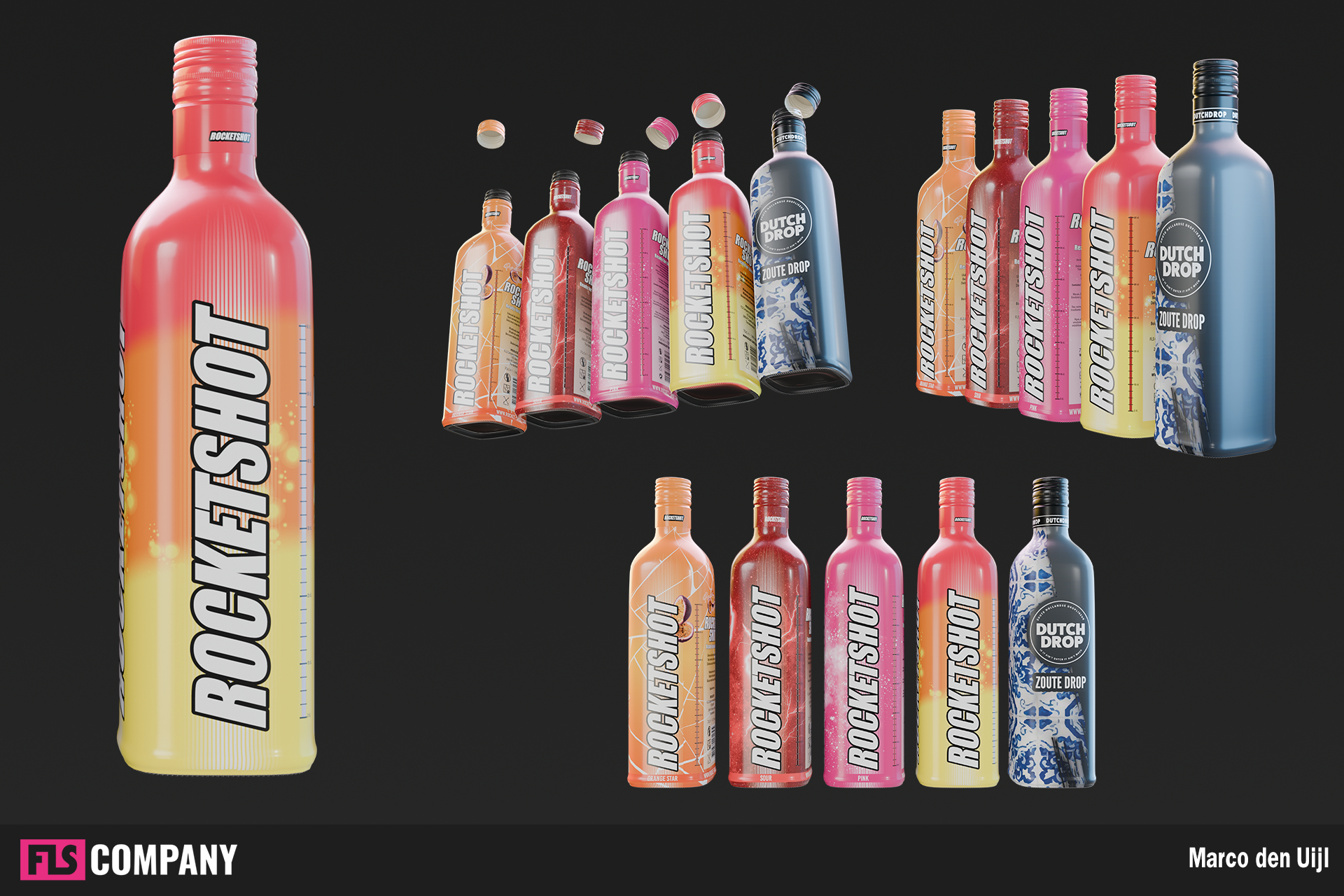
Rocketshot is the most versatile product in the range, with three variations. Dropshot — independent but sharing the same bottle shape — is grouped here accordingly. Knowing the geometry would be identical but textures and UVs would differ, I pre-compiled the textures into a customisable array with separate UV setups, allowing the full lineup to be swapped with a single slider in one file.
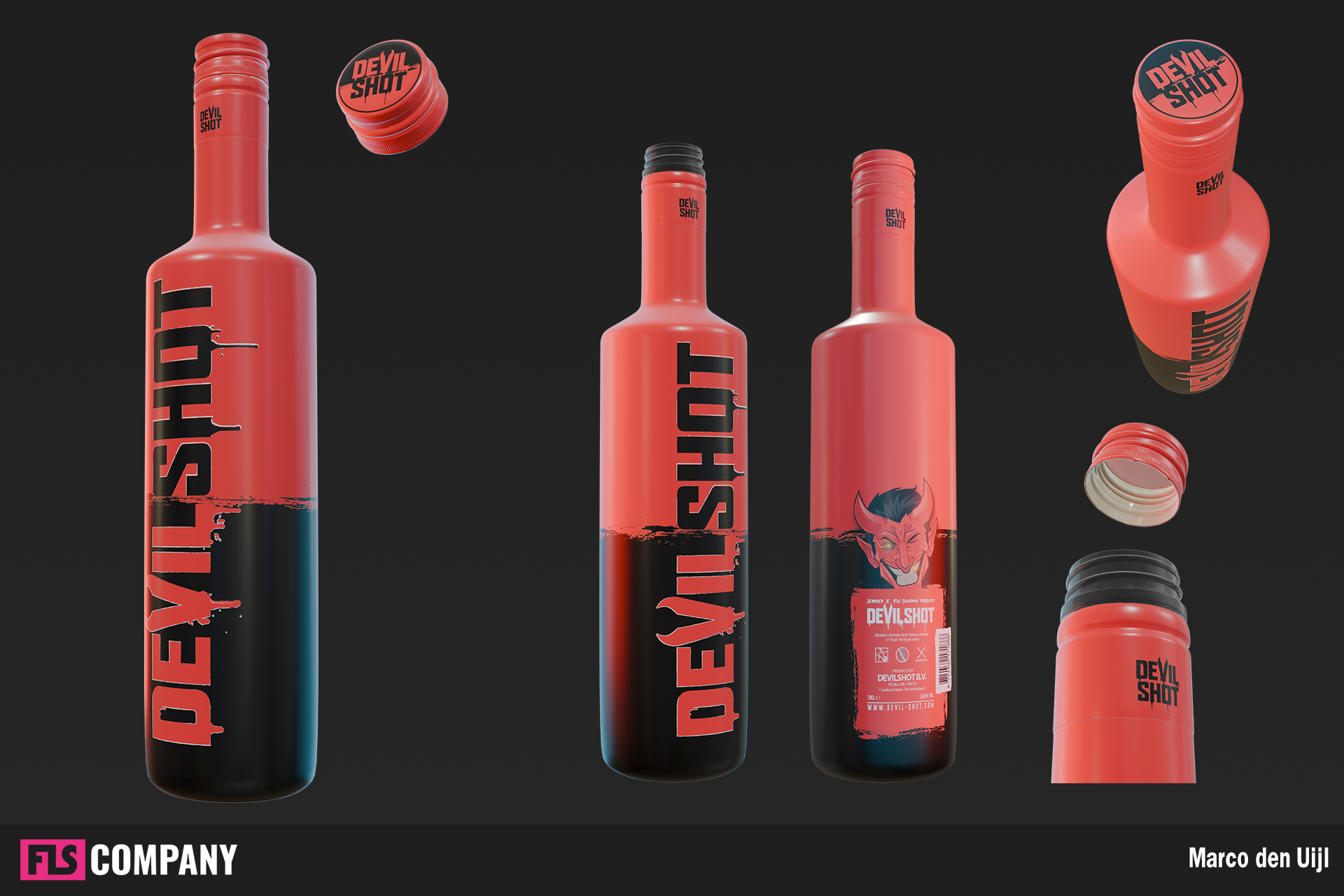
A collaborative venture between FLS and Dutch rapper Tim Kimman. Design-wise a personal favourite — simplicity and strong colours do a lot for its appearance.
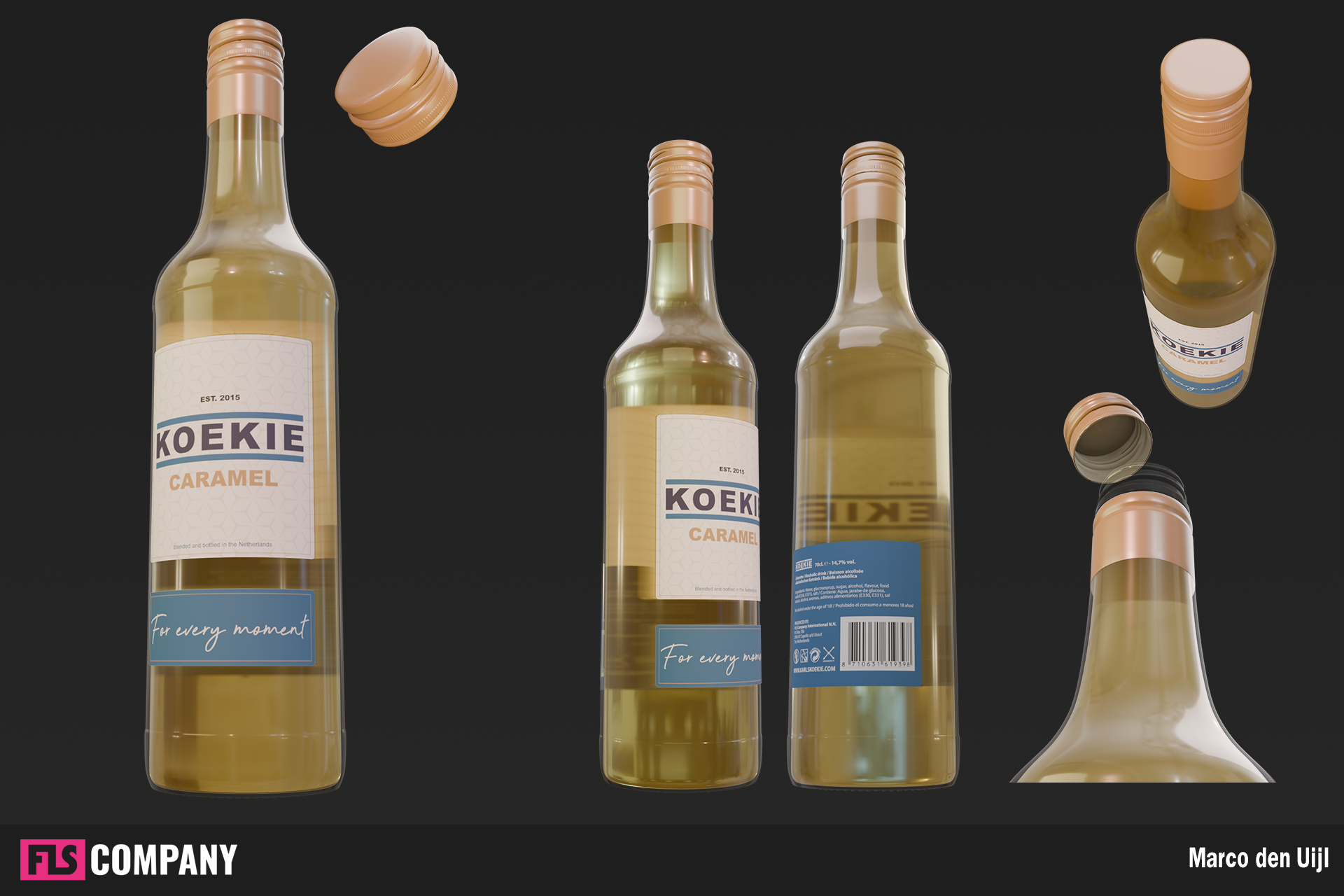
A distinguished brand in its own right — not aimed at party scenes but rather as a complementary drink. The biggest development challenge was the matte glass sleeve: because the glass is semi-transparent, warped backgrounds and rear labels show through, requiring careful shader work to achieve a convincing result.
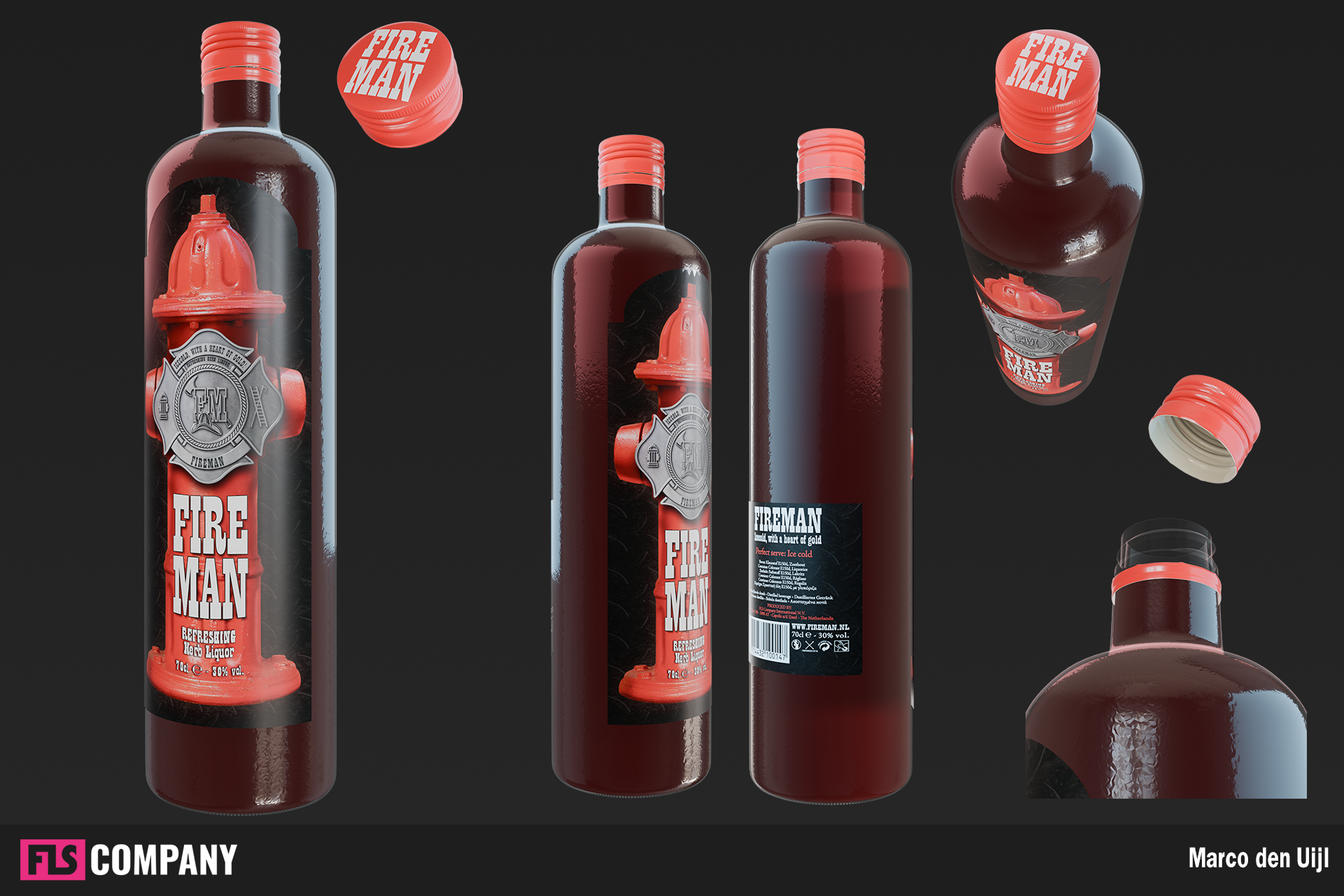
An American-styled bottle aimed at a male audience. This rendition uses the temporary design — the embedded logo iteration was developed afterwards. A notable distinction from the rest of the range is the crystallised glass texture, replacing the smooth glass seen elsewhere.
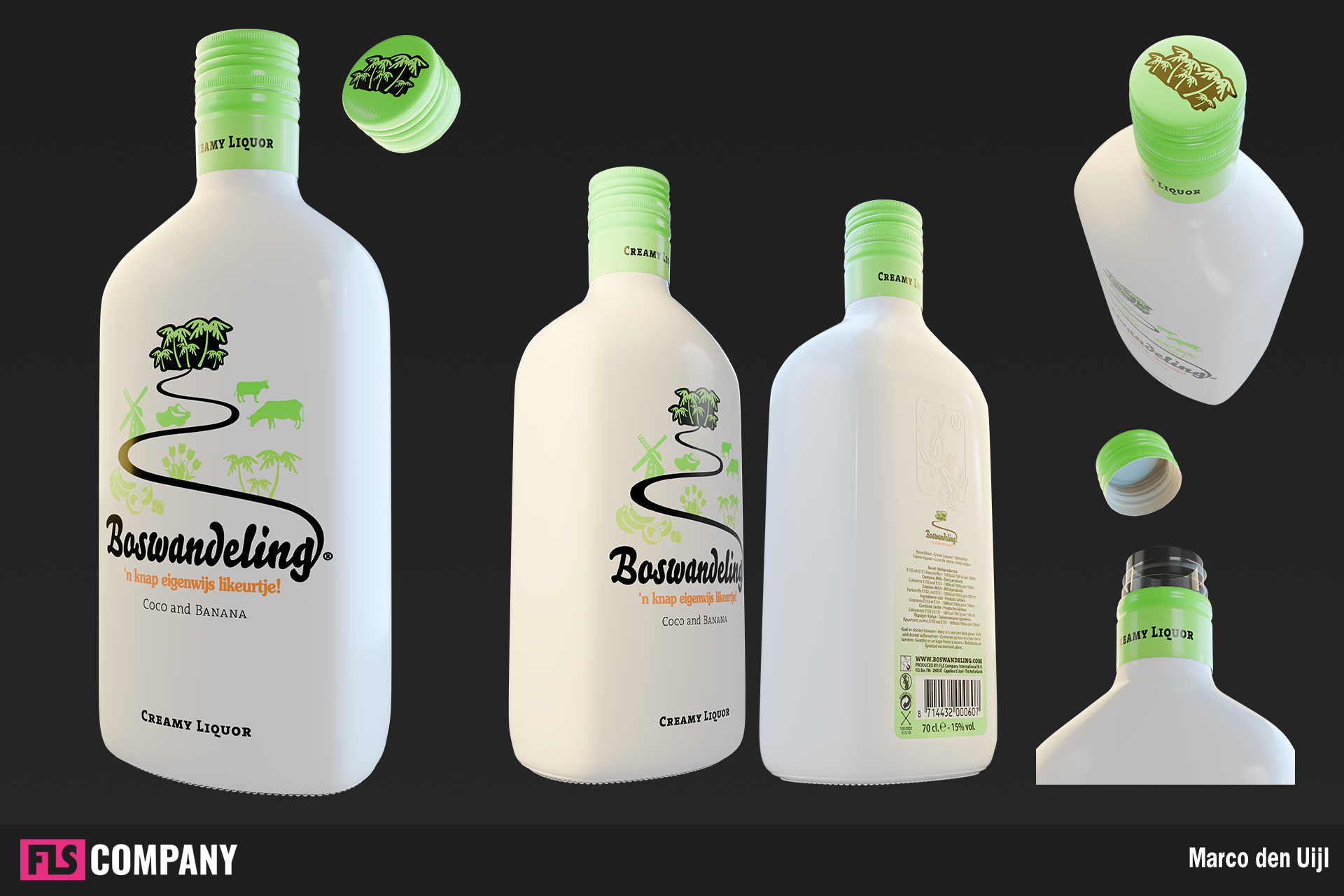
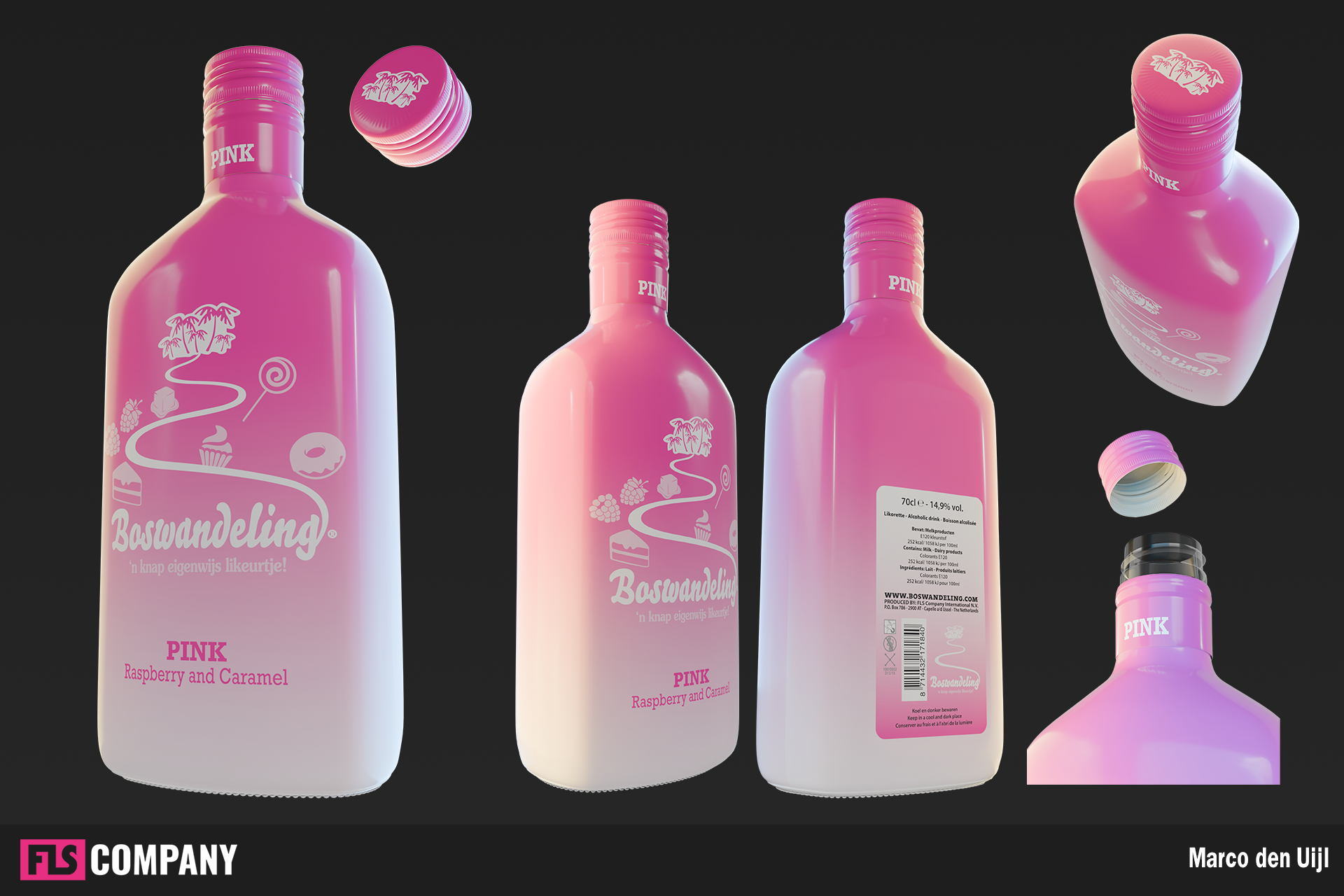
Cream-based drinks with self-contained milky flavours. The shape is distinctly different from the rest of the range — rounded yet rectangular, with a flat rear that bulges outward at the front and terminates in an even circular neck. Translating that silhouette accurately into geometry was the main challenge.
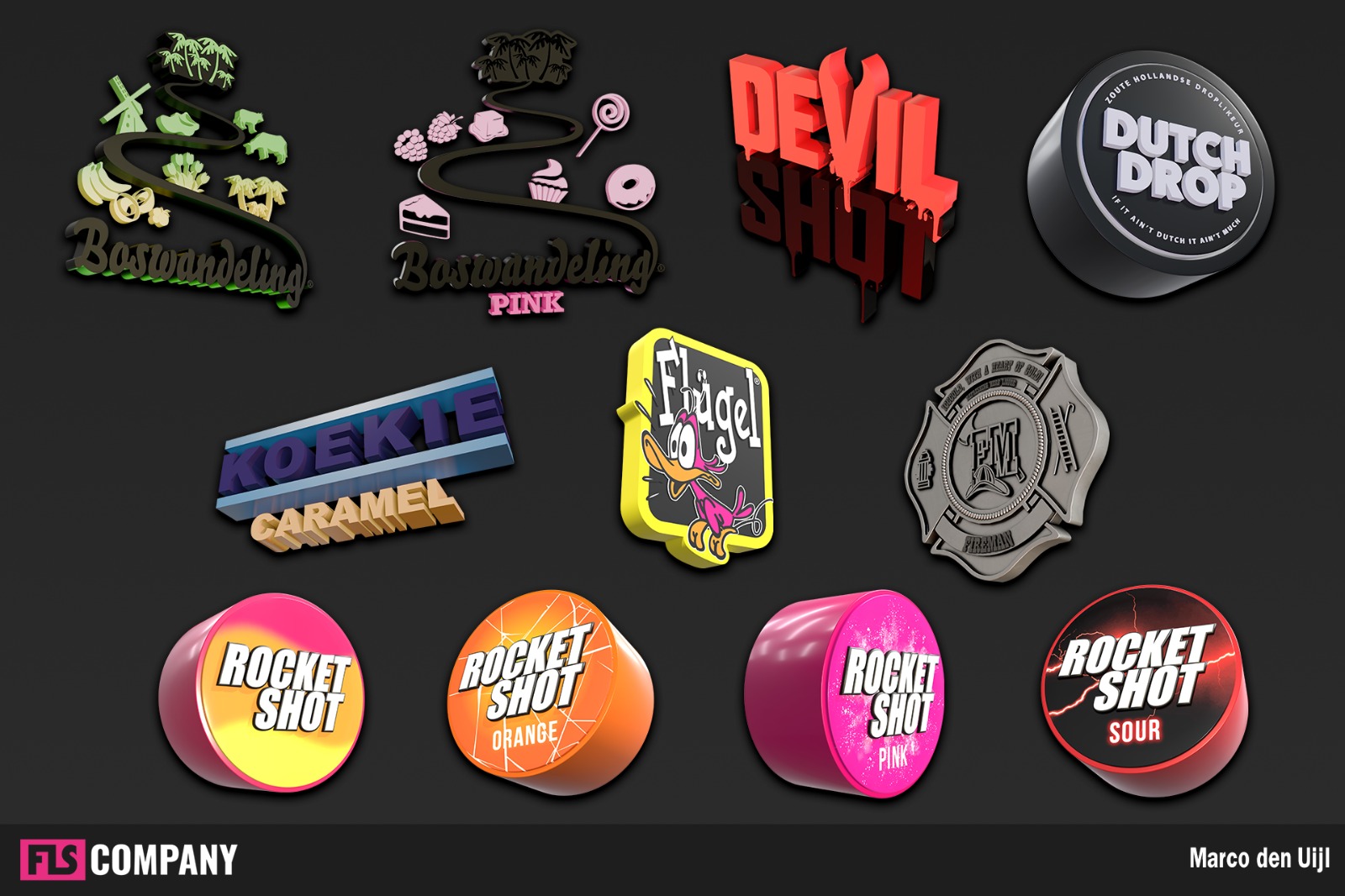
In addition to the product models, 3D equivalents of every brand logo were required. Before my involvement, only Flügel had a handful of 3D logo renders. I developed equivalents for all brands — some were straightforward, others presented real challenges. These assets have since been permanently adopted across each brand's visual identity.
Once assets were complete and in active use for graphic design, the possibilities of 3D animation for marketing opened up, allowing the placing of products in environments conventionally impossible through photography alone. These ranged from capitalizing on ongoing social media trends, or playing with spacial depth; not much was out of the realm of possibilities.